Mainstream formulas
Nestlé NAN Supreme Pro Stage 1 (800 g) — Nestlé (Nestlé Suisse S.A.)
Draft · Unpublished
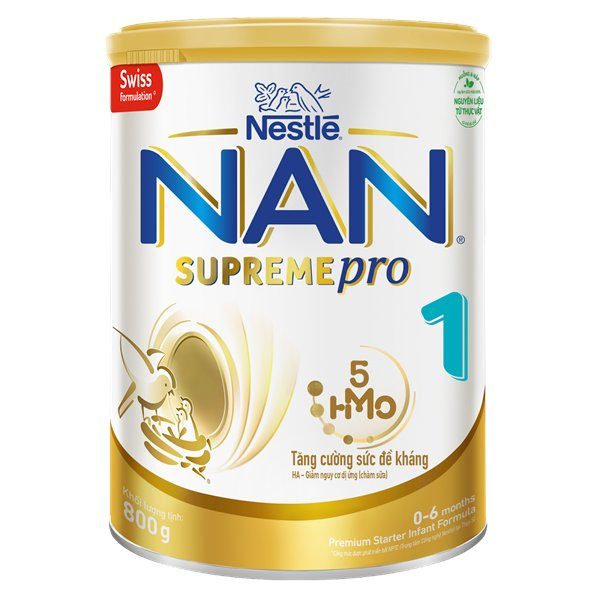
| Product | Nestlé NAN Supreme Pro Stage 1 (800 g) |
|---|---|
| Maker | Nestlé (Nestlé Suisse S.A.) |
| Category | Mainstream formulas |
| Size / format | Stage 1: birth to 6 months. 800 g tin (400 g in some markets). |
| Observed price | $35.99 (AUD) |
| Price source / date | Regents Park Pharmacy (Australia; not sold at US retail) · 2026-09-22 |
| Price confidence | indexed |
| Recall status | No exact-model recall found in consulted sources for window 2023-09-22 to 2026-09-22. CPSC database not directly queryable via available tools — status is unchecked, never cleared. |
NAN is the formula the rest of the planet buys. Nestlé's flagship infant line dominates shelves across Europe, Latin America, Asia, Australia, and the Middle East the way Enfamil and Similac split America — and NAN Supreme Pro Stage 1 is its premium hypoallergenic-leaning tier. If you're an American parent, you've probably never seen it. If you're moving abroad, having a baby overseas, or comparison-shopping the global formula landscape, it's the baseline everything else is measured against.
The formula is a partially hydrolyzed whey-protein starter for 0–6 months: milk proteins broken down to reduce allergy risk, plus DHA and probiotics, iron-fortified, made by Nestlé Suisse in Switzerland. The "Supreme Pro" positioning is allergy-risk reduction — it's the tin pediatricians in its home markets reach for when there's family history of allergy but no diagnosed condition. The 800 g tin is the standard format, with 400 g boxes in markets like India and the UAE.
What's genuinely good is the scale of the track record. This isn't a boutique import with 60 reviews; it's a mass-market formula fed to millions of babies, with official Nestlé stores rating 4.9 and pharmacy listings across half a dozen regions showing steady, boring, reliable demand. The partially hydrolyzed protein gives it a genuine functional edge over standard formulas for at-risk infants without going full medical-grade. And the price, in its home markets, is aggressively mainstream — about $36 Australian for the 800 g tin, which undercuts nearly everything in the import tier.
What's actually wrong starts with the honesty clause: my parent-discourse evidence for this one is thin. The consulted sources are listings, pharmacies, and official stores — strong on specs and prices, weak on the raw parent conversation. I didn't find the complaint texture (taste debates, stool stories, the formula-switch sagas) that a product this widely used definitely generates. That's a gap in the research, not a clean bill of health. Beyond that: it's not sold at US retail, so Americans are back in import-shop territory. The regional fragmentation is real — recipes and formats differ by market, so a Singapore review and an Australian tin aren't the same product. And the boundary that matters: "hypoallergenic" here means partially hydrolyzed, for allergy risk. If your baby has a declared cow's milk protein allergy, multiple retailers state explicitly: don't use it without your doctor, and the introduction of any other formula must be medically supervised.
The social pulse from US-indexed sources is essentially "the one that got away" — American formula shoppers know NAN by reputation, and it's a staple reference point in global formula comparisons. In its home markets it's too mainstream to be interesting, which, again, is arguably the point. Nobody writes passionate essays about the default.
The value call is almost unfair to the rest of the batch: at ~$36 AUD per 800 g in Australia, it's cheaper than every European import option and competitive with US mainstream formulas — when bought where it's sold. For Americans, import-shop pricing erases that advantage. Against HiPP HA ($42 for 600 g), you're trading organic certification and the EU-organic story for Nestlé scale and a lower home-market price. Against US hypoallergenic options like Nutramigen ($45–$78), it's a different product class — partially versus extensively hydrolyzed — so the comparison only works for at-risk, not diagnosed, babies.
Skip it if you want US-shelf availability, or if your baby has diagnosed CMPA. Buy it if you're outside the US and want the most proven mainstream hypoallergenic-leaning starter in the world, or if you're an American comparison-shopping the global landscape and want the baseline. The honest tradeoff: the world's most-used premium formula, with the world's thinnest critical discourse in my sources — proven at planetary scale, under-documented at the parent-voice level.