Adaptive & sensory gear
Bouncy Bands for Classroom Chairs — Bouncy Bands (Bouncyband)
Draft · Unpublished
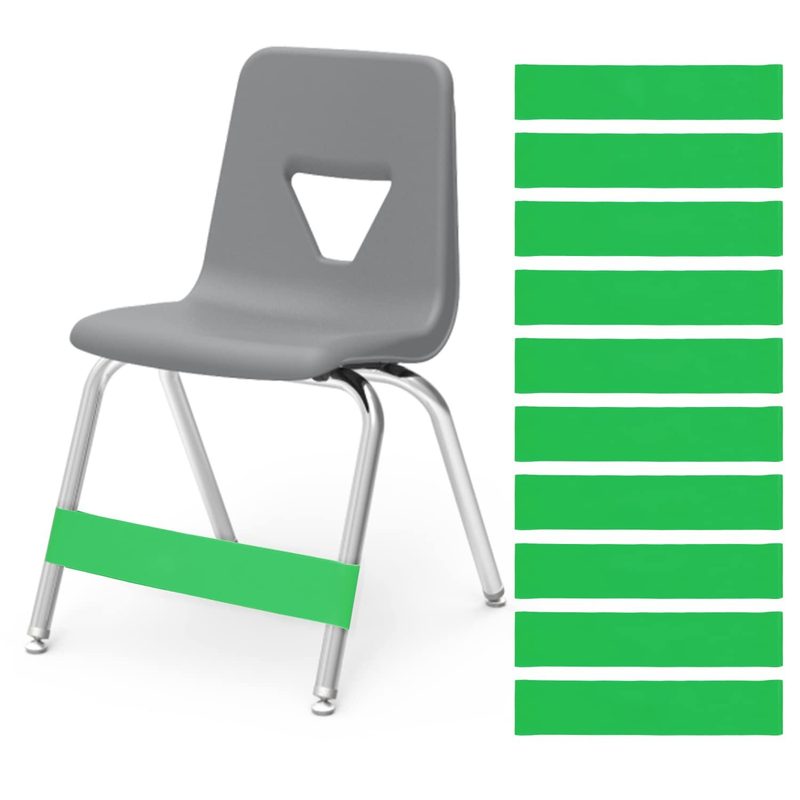
| Product | Bouncy Bands for Classroom Chairs |
|---|---|
| Maker | Bouncy Bands (Bouncyband) |
| Category | Adaptive & sensory gear |
| Size / format | Chair/desk use; elementary (legs 13–17 in apart), secondary (17–24 in), universal (10–24 in); no age limits specified in consulted sources. |
| Observed price | $15.99 |
| Price source / date | nationalautismresources.com (indexed; chair size) · 2026-09-22 |
| Price confidence | indexed |
| Recall status | No exact-model recall found in consulted sources for window 2023-09-22 to 2026-09-22. CPSC database not directly queryable via available tools — status is unchecked, never cleared. |
Some classroom products survive on good intentions. Bouncy Bands survive on teacher reorder behavior: a rubber band that stretches between chair legs so fidgety kids can bounce their feet silently instead of rocking their chairs, wandering the room, or drumming on desks. Created by an elementary school counselor, safety-tested, latex-free, and under twenty bucks a chair. It's one of the simplest sensory tools ever sold, and the classroom evidence for it is unusually concrete.
Here's the mechanism, because it's almost insultingly simple: heavy-duty rubber loop, two molded plastic support pipes, slip it over the chair legs, done in a minute with no tools. The kid puts their feet on the band and bounces, props, and stretches — a quiet movement outlet that doesn't leave the seat. The patented bit is the support pipes, which keep the band elevated at foot height instead of sliding down the chair legs onto the floor like every cheap knockoff does. Teachers care about this detail enormously, because a band puddled on the floor is just classroom litter.
What teachers actually report: a classroom reviewer who tested them with her most hyperactive students noticed longer attention spans within a week — kids who used to lose focus after a minute or two stayed on task, and chair-rocking dropped, which is a safety win on its own. The maker cites a Clemson University study claiming students stay on task 10% longer (about 35 minutes a day) and a survey of 139 teachers with big majorities reporting better focus and calmer test-taking. Flag those numbers honestly: they're brand-cited, not independently verified here, and the survey lived on the maker's marketing. But the direction matches what independent teacher reviewers describe, and the product has collected a Creative Child Product of the Year, a Scholastic "Best of," and a Teacher's Choice award along the way — awards that, whatever their rigor, reflect real classroom adoption.
What's genuinely good beyond the hype: it's silent. Teachers consistently name quiet operation as the make-or-break feature, because a fidget that distracts the other 25 kids is worse than no fidget. Installation is genuinely a minute, chairs stack and move normally with bands attached, and the latex-free rubber matters for allergy-sensitive classrooms. It also scales: 5-packs for classrooms run about $84, and at $16–$22 a chair it's the rare accommodation a teacher can fund out of pocket.
Now the complaints, because there are real ones. First and biggest: measure your chairs. Elementary (13–17"), secondary (17–24"), universal (10–24"), desk versions — buy the wrong size and it either won't fit or won't tension correctly, and this is the number-one buyer error across reseller pages. Get the tape measure out before you order. Second: the knockoff problem is severe. Generic chair bands without the support pipes slip down the legs and become exactly the nuisance the patented design solves — if the price looks too good, check for the pipes. Third: rubber wears. Heavy daily use by a vigorous bouncer will eventually fatigue the band; it's a consumable at this price, not a heirloom. Fourth: it doesn't fix everything — a kid who needs whole-body movement won't be saved by a foot band, and honest teachers pair it with wobble seating or movement breaks rather than expecting miracles.
The social pulse: teachers and OT-resource shops love it, parents of homework-time fidgeters buy the universal version for home, and the debate is basically nonexistent — the only argument is Bouncy Bands vs. generics, which the support-pipe detail settles. It's one of those products that's too cheap and too simple to generate controversy.
Value call: $21.99 direct for the universal, $15.99–$16.99 at OT-resource retailers for chair sizes, ~$84 for a classroom 5-pack. At these prices the decision isn't financial — it's whether your kid's fidgeting is feet-shaped. If it is, this is the cheapest effective accommodation in the catalog.
Bottom line: measure the chair, buy the real one with the support pipes, and expect a quieter classroom within the week.