Adaptive & sensory gear
Leckey Firefly GoTo Seat — Leckey / Firefly
Draft · Unpublished
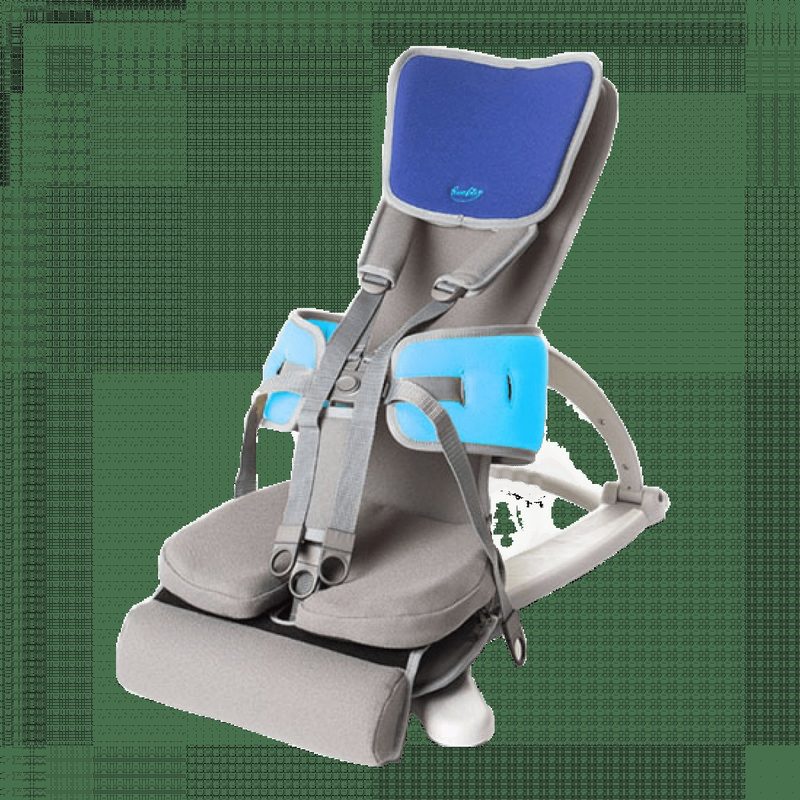
| Product | Leckey Firefly GoTo Seat |
|---|---|
| Maker | Leckey / Firefly |
| Category | Adaptive & sensory gear |
| Size / format | Size 1: approx. 1–3 years, max 15 kg (33 lbs); Size 2: approx. 3–8 years, max 30 kg (66 lbs); not for shopping-trolley use above 13 kg. |
| Observed price | UNVERIFIED (NZ $2,379–$2,649 NZD at alliedmedical.co.nz; no US price found) |
| Price source / date | UNVERIFIED — no US retailer price found in consulted sources · 2026-09-22 |
| Price confidence | thin |
| Recall status | No exact-model recall found in consulted sources for window 2023-09-22 to 2026-09-22. CPSC database not directly queryable via available tools — status is unchecked, never cleared. |
Here's the scene the Firefly GoTo Seat exists for: the family goes to a restaurant, grandma's house, the supermarket — and the child with cerebral palsy or postural needs has nowhere supportive to sit. The GoTo is Leckey's answer: a lightweight, portable postural support seat that straps onto an ordinary dining chair, a shopping trolley, or a swing, giving a child with mild-to-moderate postural needs the upper-body support to participate. It's not a car seat, not a wheelchair, not a primary seating system — it's the thing that makes "going along" possible.
A quick honesty note up front: this is thin-evidence territory. The GoTo is clinical equipment, usually supplied through therapists, equipment programs, or insurance — not bought on Amazon — so the review trail is parent blogs and charity reviews rather than thousands of star ratings. No US retail price was verifiable. What follows is built from the maker's documentation and the parent reviews that exist, and it's thinner than our usual coverage. Saying so plainly.
What the seat is: two sizes (Size 1 for roughly ages 1–3 up to 15 kg, Size 2 for roughly 3–8 up to 30 kg), with lateral trunk supports and a harness, designed for kids around GMFCS levels III–V. It straps to a hardback chair for family meals, drops into a shopping trolley so a parent can actually shop, and with an optional Floorsitter accessory works on the floor. The upholstery comes off for cleaning. Leckey donates 7% of every sale to Cerebra, the children's brain-condition charity — a genuinely nice touch.
What parents report: the detailed parent review that anchors the public record calls it "a great product" that "turns an ordinary chair into a more supportive chair for a child with poor postural control," and specifically praises how lightweight and compact it is for travel. Parent testimonials on medical retailers echo the theme: kids joining swings, trikes, and shopping trips they were previously excluded from. The participation angle is the whole point — Firefly's brand is literally "family participation" — and on that axis the GoTo delivers.
The limitations are stated clearly in the maker's own manual, which is refreshing: this is for occasional use. Limited support and pressure relief mean it is not a primary seating system, and the manual says so explicitly. Don't buy it as a daily wheelchair-seat replacement. The practical complaint from the parent review: the tether straps run short — on a particularly wide dining chair, they wouldn't do up underneath. Measure your chairs, or be ready to improvise. Sizing matters too: above 13 kg the seat can't be used in a shopping trolley, and head control affects how long a child can comfortably use it — this is a "discuss with your OT/physio" product, not a guess-and-order one.
The social pulse, such as it is: warm but sparse. Special-needs parent bloggers and equipment charities speak well of it; there's no controversy, just low volume. The Firefly line (GoTo, Splashy bath seat, Upsee, Scooot) has a solid reputation in the pediatric disability world, which lends credibility.
Value call: I can't give you an honest US price — the NZ listings run NZ $2,379–$2,649, a 2013 UK review said £125 (stale, ignore it), and Australian equipment libraries rent it at $89/week. In practice, families usually access this through insurance, NDIS-style funding, or equipment loan programs rather than paying cash. If you're in the US, start with your child's OT or equipment provider, not a shopping cart.
Bottom line: a well-regarded participation seat for the restaurant-and-grandma's-house problem — thin public evidence, so lean on your therapy team for the sizing and funding decisions.